









Traditional cremation uses combustion, so it cannot eliminate environmental impacts entirely. However, families can make thoughtful choices about transportation, memorial products, urns, ceremonies, and final disposition to create a lower-impact cremation experience.
When families want an environmentally conscious funeral, Traditional Cremation can seem difficult to reconcile with green values. Unlike natural burial, flame cremation uses a cremation chamber and significant heat to reduce the body to bone fragments that are then processed into cremated remains.
That does not mean every cremation has the same environmental footprint.
Families can make choices before, during, and after cremation that may reduce unnecessary materials, transportation, waste, and resource use. The crematory’s equipment and operating practices also matter, although these are generally decisions made by the provider rather than the family.
The most useful approach is to look at the entire funeral lifecycle rather than treating cremation itself as the only environmental consideration.
From choosing a local crematory and avoiding unnecessary embalming to selecting a biodegradable urn and planning a simple memorial, there are several ways to make a traditional cremation more consistent with your environmental priorities.
Understanding the Environmental Impact of Traditional Cremation
Traditional cremation relies on combustion, which requires substantial heat and fuel or energy.
During cremation, the body is exposed to high temperatures inside a cremation chamber. After the process, the remaining bone fragments are processed into what families commonly call cremated remains or ashes.
The environmental impact can involve several factors, including:
- Energy or fuel consumption
- Emissions from the cremation process
- Transportation
- Funeral products
- Embalming and preparation
- Caskets or cremation containers
- Flowers and decorations
- Memorial products
- Packaging
- The eventual disposition of cremated remains
This broader perspective is important.
Choosing cremation does not automatically make a funeral environmentally friendly, just as choosing a biodegradable product does not eliminate every environmental impact.
Instead, families can look for opportunities to reduce unnecessary consumption throughout the process.
Choose a Crematory Carefully
One of the most significant decisions is choosing the crematory.
Families often focus on price or convenience, but you can also ask questions about the crematory’s equipment and operating practices.
Consider asking:
- Does the crematory maintain its equipment regularly?
- Does it use modern cremation equipment?
- What emissions-control technology is used?
- How does the facility manage energy or fuel consumption?
- Does the crematory offer direct cremation?
- Can the facility explain its environmental practices?
- Is the crematory reasonably close to the place of death or funeral service?
Equipment and regulations vary by location, so avoid assuming that one crematory operates exactly like another.
A provider that is transparent about its equipment, procedures, and environmental practices can make it easier to understand the overall process.
Consider Direct Cremation
If reducing the number of funeral services and transportation steps is important to your family, direct cremation may be worth considering.
Direct cremation generally involves cremation without a traditional funeral service taking place before the cremation. Families can then arrange a memorial separately.
This can potentially reduce the number of logistical steps involved in a funeral.
For example, a family may avoid:
- A viewing
- Embalming associated with a viewingTraditional Cremation
- Certain formal funeral products
- Multiple transportation trips
- Large floral arrangements
- A rented or purchased ceremonial casket
Direct cremation is not automatically the lowest-impact option in every circumstance, but it can give families more flexibility to simplify the funeral.
A memorial can take place later, allowing relatives to gather without requiring every element of a traditional funeral service.
Avoid Unnecessary Embalming
Embalming is generally associated with preservation of the body for viewing or other funeral purposes.
If your goal is to make a Traditional Cremation as environmentally conscious as possible, consider whether embalming is actually necessary for the type of service you want.
Families planning direct cremation may not need the same preparation associated with a public viewing.
Whether embalming is required depends on the circumstances, provider, timing, transportation, and applicable regulations.
Ask the funeral provider:
- Is embalming necessary for our planned service?
- What alternatives are available?
- What preparation is required before cremation?
- Are refrigeration or other temporary preservation methods available when needed?
Avoiding unnecessary procedures can also simplify the overall funeral arrangement.
Use an Appropriate Cremation Container
A traditional casket is not necessarily required for the cremation itself.
Crematories typically require the body to be placed in an appropriate container, but specific requirements vary by provider and jurisdiction.
Ask what alternatives are accepted.
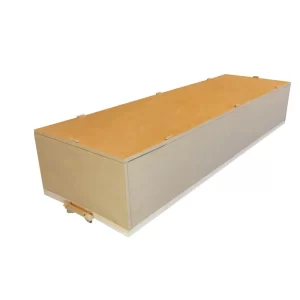
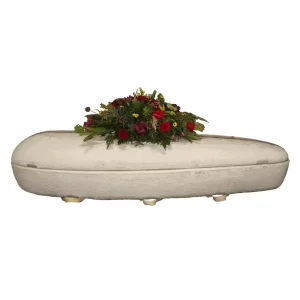
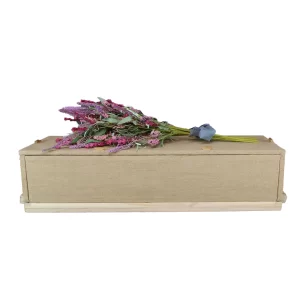
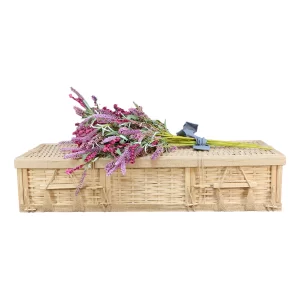
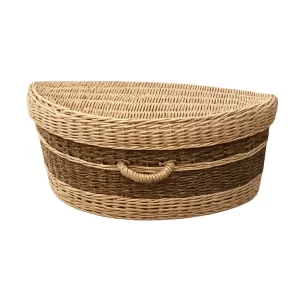
Depending on the circumstances, families may be able to choose a simple cremation container made from appropriate combustible materials rather than purchasing an elaborate casket.
This can reduce the amount of material involved in the cremation process.
If you are holding a viewing or funeral before cremation, ask whether the casket can be rented or whether another approved arrangement is available.
Always confirm the crematory’s requirements before purchasing a container.
Reduce Transportation
Transportation is an often-overlooked part of funeral planning.
A body may travel from the place of death to a funeral home, from the funeral home to a cemetery or chapel, and then to a crematory. Family members may also travel significant distances for services.
Reducing unnecessary transportation can be one practical way to simplify the environmental footprint of a funeral.
Consider:
- Choosing a local crematory
- Holding the memorial near the crematory or another convenient location
- Combining services where practical
- Avoiding unnecessary transportation between facilities
- Using digital options for distant relatives who cannot attend
The goal does not have to be eliminating every journey. Instead, consider whether each trip is necessary and whether several arrangements can be combined.
Choose a Lower-Impact Urn
After cremation, the cremated remains need a container if they are going to be kept, transported, buried, or otherwise memorialized.
This is an area where families have considerable choice.
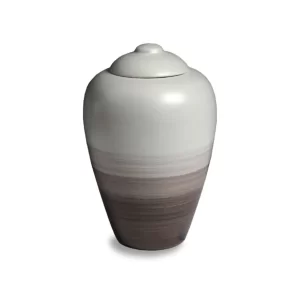
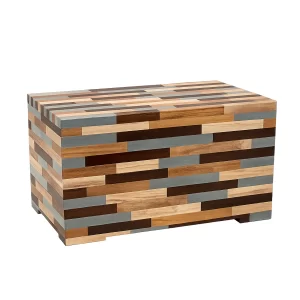
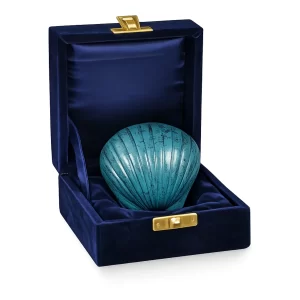
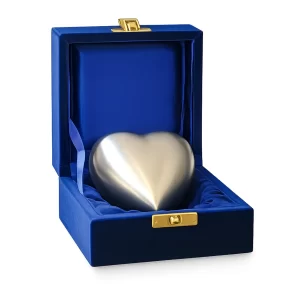
Traditional urns can be made from materials such as:
- Metal
- Ceramic
- Glass
- Wood
- Stone
- Biodegradable materials
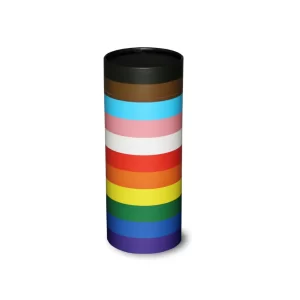
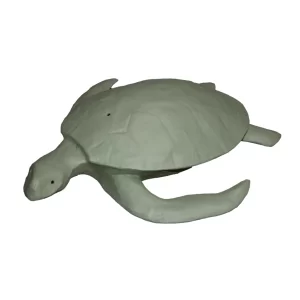
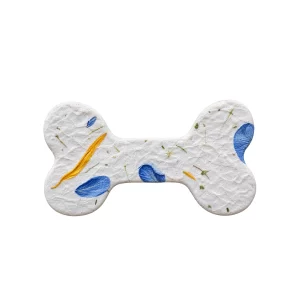
If environmental impact is a priority, consider a biodegradable urn made from suitable natural or plant-based materials.
Depending on the design and intended use, biodegradable urns can be appropriate for burial, planting memorials, or certain water-based ceremonies.
Do not assume that every urn labeled “eco-friendly” is appropriate for every type of disposition. Check the materials, instructions, and local requirements.
Consider a Biodegradable Urn
A biodegradable urn can provide an alternative to a permanent container.
Some are designed to break down naturally after burial. Others are specifically designed for planting or water-based memorial ceremonies.
Before purchasing one, consider:
- What is it made from?
- Does it contain plastic?
- Is it designed for burial or water?
- Can it support a planting ceremony?
- What size is required?
- Does the cemetery permit it?
- Is the intended water location legally appropriate?
A biodegradable urn can be a meaningful choice when the family wants the memorial container itself to eventually return to the environment.
Think Carefully About Scattering Cremated Remains
Scattering cremated remains can eliminate the need for a permanent urn, but it should be planned carefully.
Rules governing scattering vary depending on the location.
Before scattering, determine whether permission is required and whether there are restrictions for the specific location.
Consider the environmental characteristics of the site as well.
Avoid leaving behind:
- Plastic containers
- Artificial flowers
- Ribbons
- Balloons
- Metal decorations
- Other non-biodegradable materials
If a ceremony is held outdoors, take everything with you afterward unless the items are specifically permitted and designed to remain in the environment.
A simple ceremony can have less physical impact while still being deeply meaningful.
Choose a Natural Memorial
A cremation does not have to result in a traditional permanent monument.
Families can create a memorial that reflects the person’s connection to nature.
Depending on local rules and personal preferences, possibilities may include:
- A native plant
- A memorial garden
- A natural stone
- A conservation donation
- A digital memorial
- A dedicated family gathering place
- An appropriate tree-planting memorial
If cremated remains are incorporated into a planting ceremony, follow the instructions for the selected product or memorial system.
Cremated remains have specific chemical characteristics, so simply adding a large quantity directly to soil is not necessarily appropriate for every plant.
Keep the Funeral Flowers Simple
Flowers can be an important part of grieving, but large floral arrangements can involve additional materials and transportation.
If sustainability is important, consider a smaller floral display or locally sourced flowers.
You can also explore alternatives such as:
- A single meaningful bouquet
- Seasonal flowers
- Locally grown flowers
- Potted plants where appropriate
- A living plant
- A charitable donation in the person’s memory
If flowers are used at an outdoor memorial, make sure that plastic wrapping, floral foam, ribbons, wire, and other non-biodegradable materials are removed afterward.
Avoid Excessive Funeral Merchandise
A green approach does not require purchasing every available memorial product.
Consider which items will genuinely contribute to the ceremony or remembrance.
You may be able to reduce materials by avoiding unnecessary:
- Printed programs
- Promotional memorial products
- Plastic keepsakes
- Disposable decorations
- Oversized floral displays
- Elaborate packaging
- Single-use ceremonial items
Digital invitations, online memorial pages, and electronic photo displays can sometimes reduce the amount of printed material required.
This does not mean families should eliminate meaningful traditions. Instead, prioritize the items that genuinely matter.
Choose Sustainable Memorial Stationery
If you want printed funeral programs, invitations, prayer cards, or thank-you notes, consider using recycled or responsibly sourced paper.
You can also reduce quantities by printing only what guests need.
For example, a family could provide one program per household rather than one for every attendee, where appropriate.
Digital versions can also be offered to family members who prefer electronic information.
Small choices like these may not transform the entire environmental impact of a cremation, but they can help reduce unnecessary consumption.
Ask About Crematory Emissions
Families interested in environmentally conscious cremation may want to understand how a crematory manages emissions.
Modern crematories may use equipment designed to control emissions and meet applicable air-quality requirements.
Ask the provider:
- What emissions controls are installed?
- How frequently is the equipment maintained?
- What local environmental requirements apply?
- Does the facility monitor or document compliance?
- What type of cremation equipment is used?
The answers will depend on local regulations and the specific facility.
It is better to ask for concrete information than to rely on broad claims that a crematory is “green” or “eco-friendly.”
Consider the Full Funeral Lifecycle
One of the most useful ways to evaluate Traditional Cremation is to look beyond the cremation chamber.
Think about the entire journey:
Place of death → transportation → preparation → funeral or memorial → cremation → urn → final disposition
Each stage may involve materials, energy, transportation, or services.
You can potentially reduce impact by:
- Choosing local providers
- Simplifying transportation
- Avoiding unnecessary embalming
- Selecting a simple cremation container
- Choosing a lower-impact urn
- Reducing printed materials
- Using modest floral arrangements
- Selecting a meaningful but simple memorial
- Planning final disposition carefully
This approach gives families more control over the parts of the funeral they can actually change.
Traditional Cremation vs. Other Green Options
If environmental impact is your highest priority, it may also be useful to compare cremation with alternatives such as natural burial or other emerging forms of disposition.
There is no universal answer about which option has the lowest environmental impact in every situation.
The result depends on the specific practices, location, transportation, products, energy sources, and facilities involved.
For example, a local natural burial and a distant cremation may have different transportation considerations. Likewise, two crematories may have different equipment and operating practices.
Rather than choosing based on a label alone, compare the complete process.
A Practical Green Cremation Checklist
Use this checklist when planning a lower-impact cremation:
- Compare local crematories
- Ask about emissions controls and equipment
- Ask whether direct cremation is appropriate
- Determine whether embalming is necessary
- Choose an approved simple cremation container
- Reduce unnecessary transportation
- Consider a biodegradable urn
- Check rules for scattering or burial
- Choose local or seasonal flowers
- Avoid unnecessary plastic decorations
- Reduce printed materials
- Consider a natural memorial
- Donate or reuse appropriate flowers and plants
- Ask for an itemized price list
- Document your final disposition wishes
This checklist can also be used when pre-planning your own funeral arrangements.
Questions to Ask a Cremation Provider
Before selecting a provider, ask clear questions about both the service and the environmental practices.
Useful questions include:
- Where does the cremation take place?
- What type of cremation equipment does the facility use?
- How are emissions controlled?
- Is the facility regularly maintained and inspected?
- What preparation is required?
- Is embalming necessary for the selected service?
- What cremation containers are permitted?
- Can you provide a biodegradable urn?
- What are the transportation arrangements?
- What options are available for the final disposition of the remains?
A transparent provider should be able to explain the services and requirements without relying entirely on environmental marketing language.
Conclusion
Making Traditional Cremation as green as possible does not mean eliminating every environmental impact. Flame cremation requires energy and produces emissions, but families can make thoughtful choices around the cremation process and everything surrounding it.
Choosing a local provider, asking about emissions controls, avoiding unnecessary embalming, selecting an appropriate cremation container, reducing transportation, and choosing a biodegradable urn can all contribute to a more environmentally conscious arrangement.
The most important principle is to consider the entire funeral rather than focusing on one product or service. A simple, carefully planned cremation can reduce unnecessary materials and services while still providing a respectful and meaningful farewell.
FAQs
Can traditional cremation be environmentally friendly?
Traditional cremation has environmental impacts because it uses combustion and energy, but families can make choices that reduce unnecessary materials, transportation, and services surrounding the cremation.
Is direct cremation more environmentally friendly?
Direct cremation can simplify the funeral process and may reduce some transportation, products, and services. Its overall environmental impact depends on the specific arrangements and crematory.
Is embalming necessary before traditional cremation?
Embalming is not necessarily required for every cremation arrangement, but requirements vary according to circumstances and local rules. Ask the funeral provider what preparation is actually necessary.
Are biodegradable urns suitable after cremation?
Many biodegradable urns are specifically designed for burial, planting, or water-based memorials. Check the product instructions and confirm that the intended final disposition is legally permitted.
How can I reduce transportation during a cremation?
Choosing a local crematory, combining services where practical, and avoiding unnecessary trips between facilities can help reduce transportation associated with a funeral.
How do I choose a greener crematory?
Ask about the facility’s cremation equipment, emissions controls, maintenance, applicable environmental requirements, and transportation arrangements. Request specific information rather than relying only on claims such as “green cremation.”